Skid Steer Laser Grading Box vs Traditional Grading Methods: A Cost-Effective Comparison
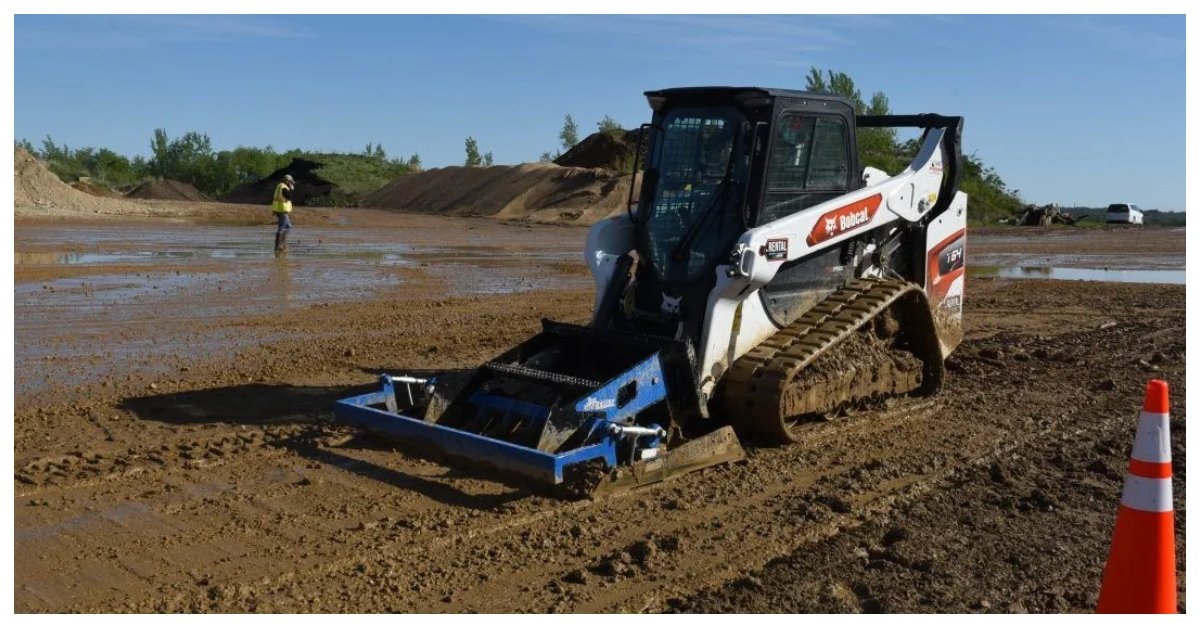
The evolution of construction and landscaping methodologies has introduced more technologically advanced equipment like the skid steer laser grading box. This tool promises precision and speed that traditional methods struggle to match.
The shift from manual to automated grading systems has broad implications for efficiency, accuracy, and cost-effectiveness. This article delves into the specifics of laser grading compared to its traditional counterparts, highlighting significant differences and potential savings.
Skid Steer Laser Grading Box Explained
The skid steer laser grading box, an advanced grading technology, attaches to skid steer loaders and uses laser-guided controls to achieve precise contouring of the land. This system is critical for tasks that demand a high level of accuracy, such as preparing the foundation for large buildings or level sports fields.
Skid steer laser grading box Unlike manual grading, the laser system reduces human error significantly. Operators set the desired grade specifications into the system, and the attached box grades the terrain to these exact parameters with minimal oversight required. This leads to a more uniform and accurate grade across the project.
For construction companies, the adoption of a skid steer laser grading box translates into a direct reduction in labor hours and the need for fewer passes to achieve the desired grade. These factors contribute to a shorter project timeline and lower overall project costs.
Traditional Grading Methods Overview
Traditional grading often involves manual labor and the use of standard construction equipment like bulldozers and graders. These methods, while effective for large-scale rough grading, lack the precision necessary for more detailed work.
Operators rely extensively on their skills and experience to achieve the correct grade, which can vary in consistency. Factors such as operator fatigue and varying skill levels across different crew members often lead to discrepancies in the final grade, requiring additional time and resources to amend.
The reliance on physical labor and mechanical tools also means traditional methods are generally slower and more prone to errors. This inefficiency often leads to increased costs due to overruns and the need to redo sections of work to meet stringent standards.
Comparing Costs: Laser Grading vs Traditional Methods
When evaluating the cost-effectiveness of skid steer laser grading boxes versus traditional grading methods, the primary consideration is the cost of equipment versus the savings on labor and time. A laser grading system, though initially more expensive, can significantly reduce long-term costs due to its high efficiency and precision.
The higher upfront investment in laser technology is often justified by the reduction in manual labor costs, minimal errors, and faster completion times. For large projects, the savings from these efficiencies can easily offset the initial costs within a short period. A study on grading technology investments demonstrates that companies can recover the costs of laser grading equipment in just a few projects.
Additionally, the use of laser grading reduces material waste by ensuring that grading is done right the first time, lowering the costs associated with purchasing extra materials and disposing of waste.
Efficiency and Accuracy in Modern Construction Grading
The transition from traditional grading to skid steer laser grading represents a significant leap in both efficiency and accuracy in construction site preparation. The precision of laser grading allows for exact terrain manipulation without the trial-and-error associated with manual methods.
Laser grading systems provide a consistent output, enhancing the structural integrity of foundational work. This consistency is crucial for projects requiring stringent compliance with design specifications, such as municipal and major commercial developments. This results in fewer compliance issues and project delays.
Moreover, the automation aspect of laser grading reduces human error dramatically, leading to smoother project execution and higher client satisfaction. Health and safety improvements on construction sites are additional benefits as reduced manual labor decreases the risk of workplace accidents.
Ultimately, comparing the skid steer laser grading box with traditional grading methods reveals significant advantages in terms of both cost-effectiveness and operational efficiency. The upfront investment in laser grading technology is quickly recouped through faster project completion, fewer errors, and reduced labor costs, making it an ideal choice for modern construction projects seeking precision and reliability.